The ECoC evidence base
Forty years of European Capitals of Culture in their own words: what cities promised, what they did, and what the evaluations found.
documents
cities
evaluations
bid books
title years covered
30 documents of type ex-post evaluation for “Cultural programme”
Clear
…the early stages to delivery, the Foundation made a clear distinction between large events led by the Artistic Director and the rest of the programme managed by the programming team.
…and that was more extensive compared to Malta’s cultural “baseline” offering in previous years. The cultural programme featured 168 projects involving nearly 500 events.
The cultural programme was complemented by an additional group of projects entitled "2011 personally".49 However, the themes that were identified during the planning phase were not later used for communication of the culture programme to…
Cultural, artistic and social projects – to promote the cultural and civic activities of residents in the culture of today‘s contemporary European society in order to create conditions for all to become authors and participants in the…
…at all 3 5 Don't know 8 Total respondents: 30 0% 20% 40% 60% Source: Ecorys survey 80% % 7 % 33 % 23 % 10 % 27 % 3.5 Effectiveness 3.5.1 Cultural and artistic content The focus of the cultural programme was on artistic creation in…
Objectives pursued during the title year (2007) "External objectives" Present to Europe our city's cultural identity and diversity and promote the understanding and co- operation of our communities on a European scale Developing…
Each bridge featured a cultural performance, with a range of disciplines represented. The events were organised by hundreds of performers and artists and witnessed by tens of thousands of people.
The programme of festivals, installations and events in public spaces featured three key elements: i) large, open-air events, including the opening ceremony (which took place at 22 different sites across the city) and the closing ceremony…
Each bridge featured a cultural performance, with a range of disciplines represented. The events were organised by hundreds of performers and artists and witnessed by tens of thousands of people.
For the implementation of the Rijeka 2020 - European Capital of Culture project, it was crucially important to develop capacities within the cultural sector in order to enable the implementation of a rather comprehensive project, but also…
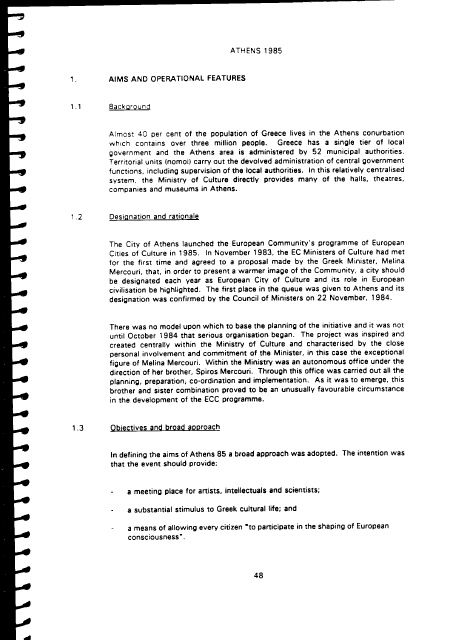
…included improvements to 12 municipal cultural centres, undenaken after a full technical and financial audit of the venues in the Athens region. Four existing theatres received improvements, and new facilities were erectgd at Petra in a…
Increased number of cultural contents, public debates, conferences, and seminars that reflect problems in local communities. Increased two-way exchange and visits of local and international artists.